The rhythm of a class
Sessions typically last 90–120 minutes. A typical session includes an opening collective bow, about 20–30 minutes of warm-up including ukemi and uchikomi, instruction and practice of specific techniques, and about 30 minutes of randori. A cooldown and stretching follow, before club updates and a closing collective bow. This is a typical pattern, not a fixed timetable; activities and timing vary with the class.
Ukemi develops receiving and falling skills. Uchikomi repeats entries into techniques without completing the throw. Nagekomi adds the complete throw. Groundwork develops control, holds, transitions, and escapes. Repetition helps turn an unfamiliar movement into a skill you can recognize and use.
Randori is free practice with a moving, responding partner. We practice both throwing randori (nage-waza), focusing on movement and throws—including appropriate sacrifice throws—and groundwork randori (ne-waza), focusing on control, holds, escapes, and other techniques appropriate to the participants. It resembles a contest in some ways, but its purpose is learning. It is not a requirement to win every exchange. Intensity and participation must suit experience, readiness, and the activity’s instructions. Observation is useful too: notice grips, balance changes, timing, and how partners maintain control.
After randori, we take time to slow down, catch our breath, and stretch gently. Follow the sensei’s guidance, work within a comfortable range, and avoid forcing a stretch. We then come together for questions, key reminders, and club updates before the closing collective bow.
Tori and uke: two learning roles
Tori applies the technique; uke receives it. Both roles require attention and skill. Tori maintains control through the movement and landing. Uke gives a realistic response at the agreed pace and practices receiving safely. Partners alternate roles, communicate, and avoid turning a cooperative drill into a contest.
Practice techniques on both right and left sides. The aim is balanced learning and adaptable movement. Keep the effort appropriate to your control and readiness on each side rather than forcing equal speed or power before you are ready.
A useful learning mindset
Start with a manageable number of techniques. Notice one detail, repeat it, and reflect on what changed. Consistency matters more than rushing through a list. Progress includes safer falling, better posture, more controlled movement, clearer communication, and being a considerate partner—not only new throws or a new belt.
Treat intensity in randori as an ongoing conversation between two partners. Agree on a comfortable level before starting, and keep communicating as you practice.
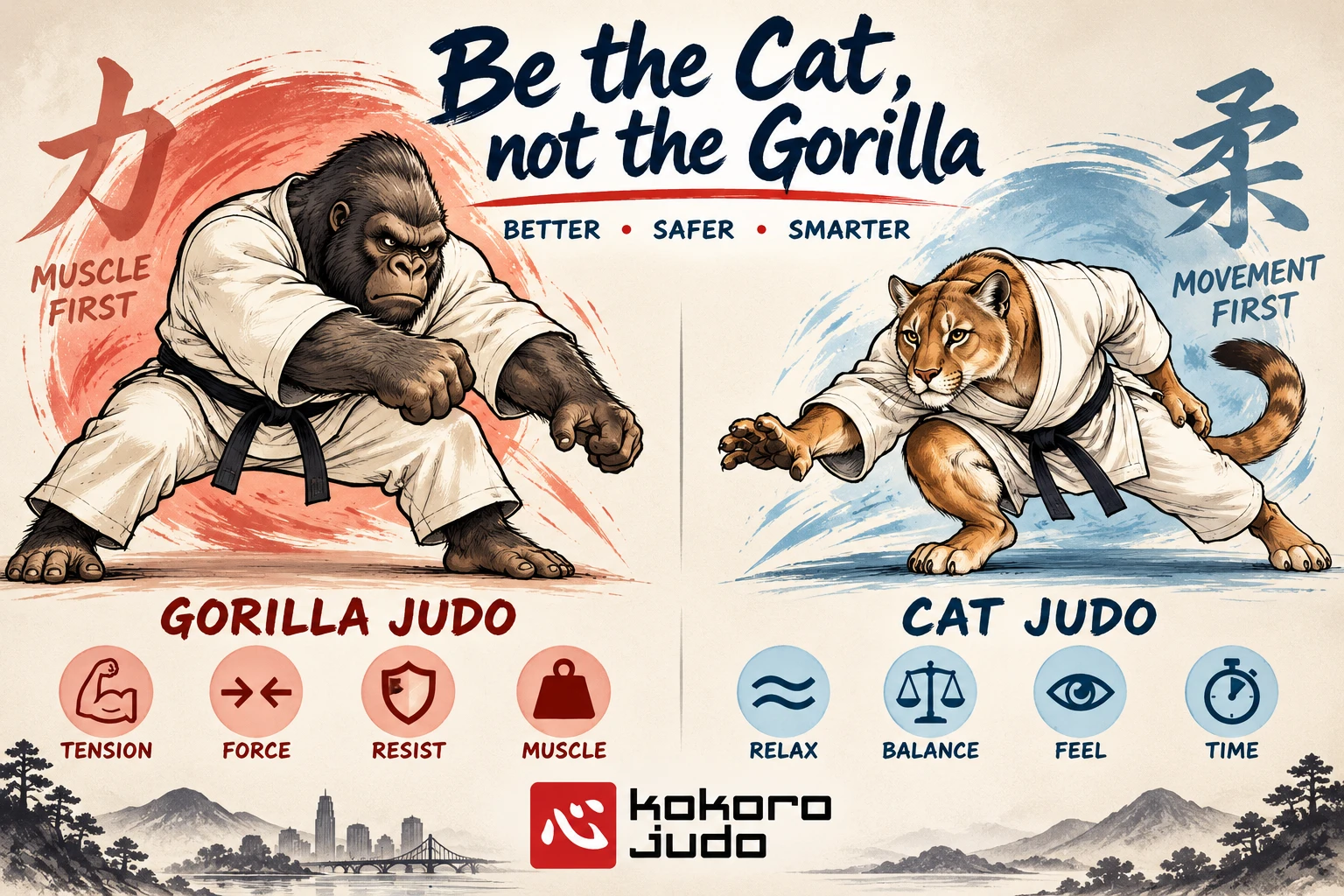
“Be the cat, not the gorilla” is a reminder about how to practice, not a label for people: relax unnecessary tension, move into position, feel your partner’s balance, and choose your timing. Strength can help; skill makes it useful.