
A Japanese martial art and a form of education
Shihan Jigoro Kano (1860–1938) developed modern judo from earlier jujutsu traditions and established the Kodokan in Tokyo in 1882. The Kodokan remains an important center for judo education, practice, and theory. Judo entered the Olympic Games in 1964.
Judo means “the gentle way.” It is a structured martial art and sport in which technique, balance, movement, and timing matter. “Gentle” does not mean effortless or without contact. It means learning to use effort intelligently, while exercising control and accepting responsibility for another person’s safety.
Judo develops the person as well as the athlete, reflecting the International Judo Federation’s educational mission. Kokoro’s affiliation connects the club with USA Judo, the national governing body within the broader international judo community. Read the IJF mission and governance documents for background.
Two principles to carry into every practice
Seiryoku-Zenyo — effective use of mind and body. Avoid treating every problem as a test of strength. Use posture, positioning, movement, and timing; learn how your partner’s movement can help create an opportunity.
Jita-Kyoei — mutual welfare and benefit. Your partner makes learning possible. Cooperate, communicate, and look after one another so both people can progress. This principle extends beyond practice to the life of the club.
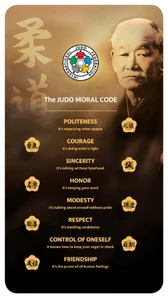
The judo moral code in everyday actions
Politeness: greet others and treat partners courteously.
Courage: try unfamiliar tasks thoughtfully and speak up when you need help.
Sincerity: be honest about your experience, effort, and limitations.
Honor: keep commitments and act responsibly.
Modesty: stay open to learning, whatever your rank.
Respect: value every person and care for the training space.
Self-control: manage your reactions and the intensity of your practice.
Friendship: build trust through shared learning and mutual support.
Put these eight values into practice through the way you train, communicate, and care for your partners. Explore the IJF judo moral code.