
Rules for every practice
Competition rules distinguish between different grips and situations, and can change. Distinguish prohibited hand or arm contact with the legs from permitted foot sweeps and other leg techniques. Visit the IJF rules documents page and review the most recent “IJF Sport and Organisation Rules (SOR)” version. Also check the rules of the specific event; class instructions may be more restrictive.
Tapping and stopping
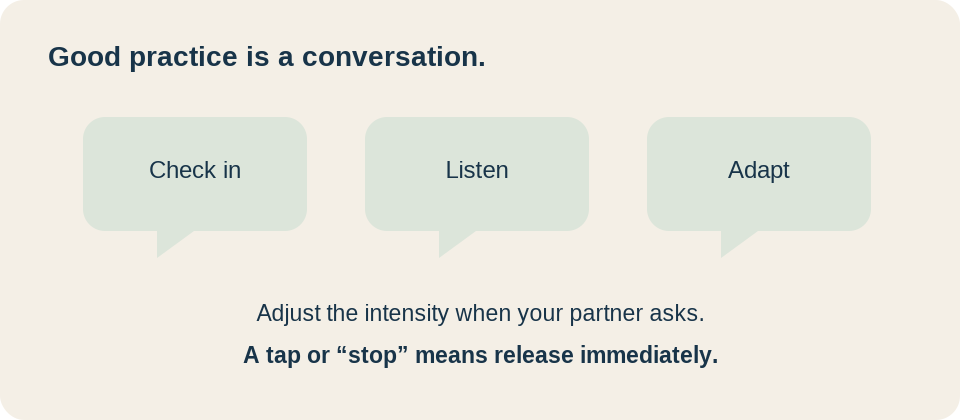
Tap early whenever you need an activity to end—do not wait for pain or injury. Tap repeatedly and clearly on your partner, yourself, or the mat, or say “stop” or “maitta” (“I give up”). A clear verbal signal is especially useful if your hands are trapped.
The person applying the technique must release immediately when a partner taps or asks to stop, then check that they are comfortable and safe. A tap is communication, not a failure. “Matte” (also written “mate”) means stop or wait; stop promptly when you hear it.
Prepare yourself and your equipment
Remove jewelry and hard or metallic objects. Secure long hair in a ponytail or bun with a soft, non-metallic tie. Keep fingernails and toenails short. Arrive clean, with a clean uniform; shower before practice when needed. Tell the person leading the session about anything that could affect your ability to participate safely. Safety depends on shared attention, not on assuming someone else has noticed a problem.
Misconduct and Abuse Reporting
Safety, respect, and inclusion are a responsibility we all share. If you witness or experience misconduct, including emotional misconduct, physical misconduct, or violations of the Minor Athlete Abuse Prevention Policies (MAAPP), use the misconduct and abuse reporting information to report your concern and help protect our judo community.